Return to the learning.
Class distributions, same-learner comparisons, individual charts and tables, personal goals, eligible trends, and the evidence behind each result.
Try teacher monitoring BOOMERANGPROGRESSEvidence. Response. A useful return.A Boomerang Classroom product
Start with teacher progress monitoring: class evidence, individual goals, charts, and a clear next step. Boomerang Progress connects that record to special education, MTSS, and school leadership, so support comes back to the classroom and learning comes back into view.
Designed by a teacher with 20+ years of classroom and co-teaching experience, with a commitment to the needs of all students.
Staff accounts. Clear reports for students and families.
One target. Comparable observations. A documented next step.
Teachers, support staff, and school leaders need a consistent way to understand progress. Boomerang connects their work around the same learning targets, dated evidence, instructional decisions, and review schedule — with access matched to each person’s responsibilities.
Why one coordinated model helpsSet the target, criteria, support, and review date.
Collect a comparable result and its context.
Read the evidence together and listen to the student.
Choose a teaching response and document the decision.
Reassess, explain the progress, and decide what comes next.
Teacher progress monitoring is the starting point, not an afterthought. The same learning record connects classroom checks, specialized support, schoolwide review, and the next teaching decision.
Class distributions, same-learner comparisons, individual charts and tables, personal goals, eligible trends, and the evidence behind each result.
Try teacher monitoringFollow assigned goals across classrooms. Issue a reviewed action from an existing decision, then inspect delivery context and new evidence.
Try the caseload viewAuthorized schoolwide monitoring connects students, goals, classroom evidence, and teacher handoffs. The next meeting starts with what returned.
Try schoolwide MTSSMove from protected school summaries to authorized class and student records. Viewing is separate from score editing and confidential access.
Try school leadershipAll monitoring tools work without AI. The preview includes an optional local summary template, not a connected AI model. Any future AI drafting requires an approved provider, source-linked output, and staff review. No automated scores, tier changes, or IEP decisions.
Start with the learning target. Progress guides the evidence, timing, review, and report.
Select class standards. Set targets in grade-team scope and sequence, connect grades 7–12, and choose the evidence and review schedule.
Choose an assessment result, student reflection, support delivered, or next step. Each entry has a clear example and purpose.
Read charts alongside the evidence quality, learning opportunities, and student perspective. Keep different measures separate.
Select the evidence, write a clear explanation, and preview the exact report. Download or print it through your school’s approved process.
Choose state or national references for a class. Plan units with your grade-level team, inspect department alignment, and bring published targets directly into class progress monitoring.
Search by department, grade, state, and framework. Browse curated national framework references and school-reviewed state or pathway selections. Additional catalogs require reviewed imports.
Set the content, success criteria, scale, work sample, and collection/review dates in one guided plan.
Trace a strand across grades 7–12 without turning different course expectations into interchangeable scores.
Enter class work one criterion at a time. Record a teaching response and return to examine what the next evidence shows.
Actual screens from the staff edition. Each screen has a clear job in the learning process.
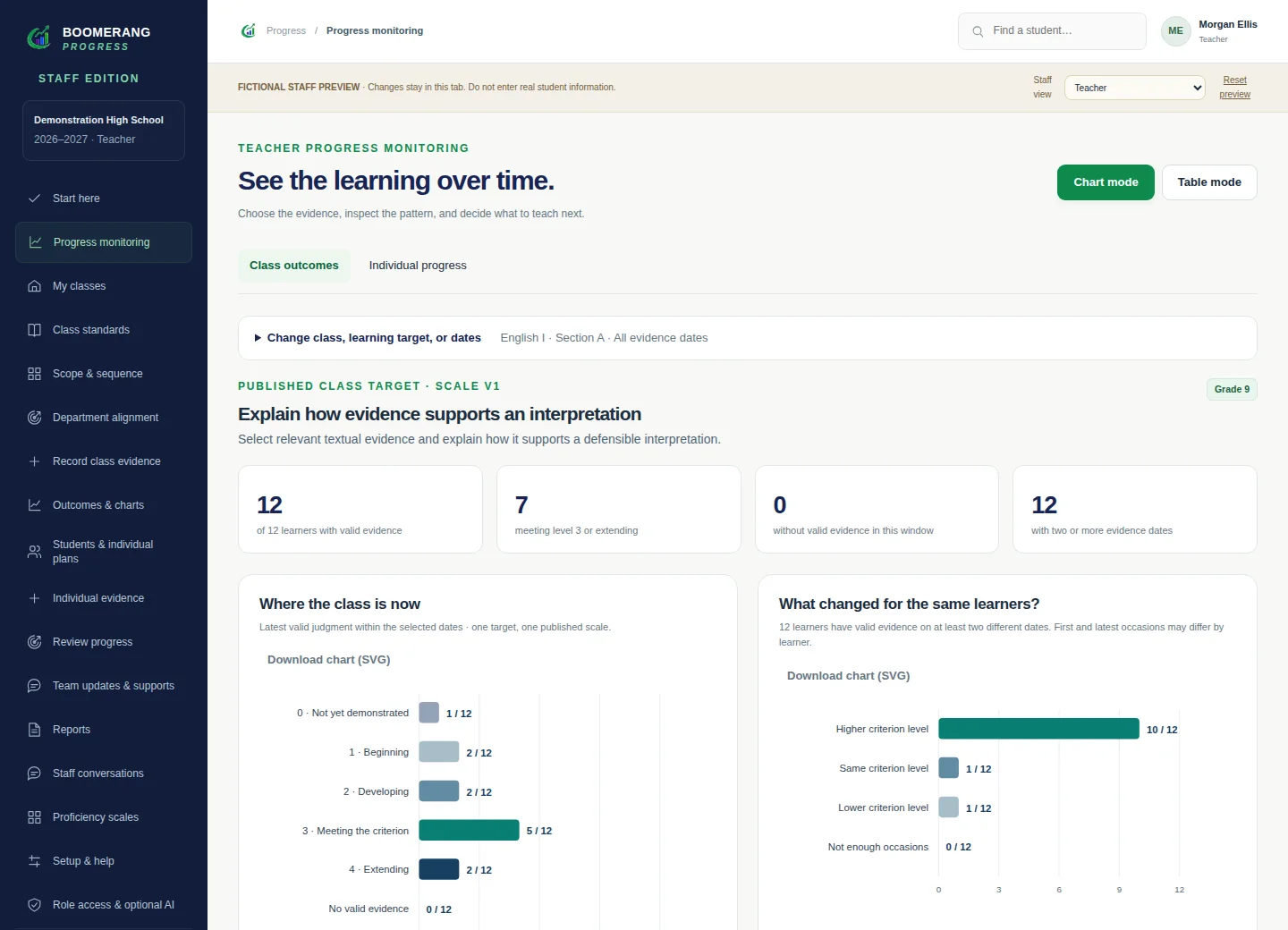
Read the current class distribution, compare the same learners across evidence occasions, and open an individual evidence trail. Switch to a table whenever that is more useful.
Explore this screen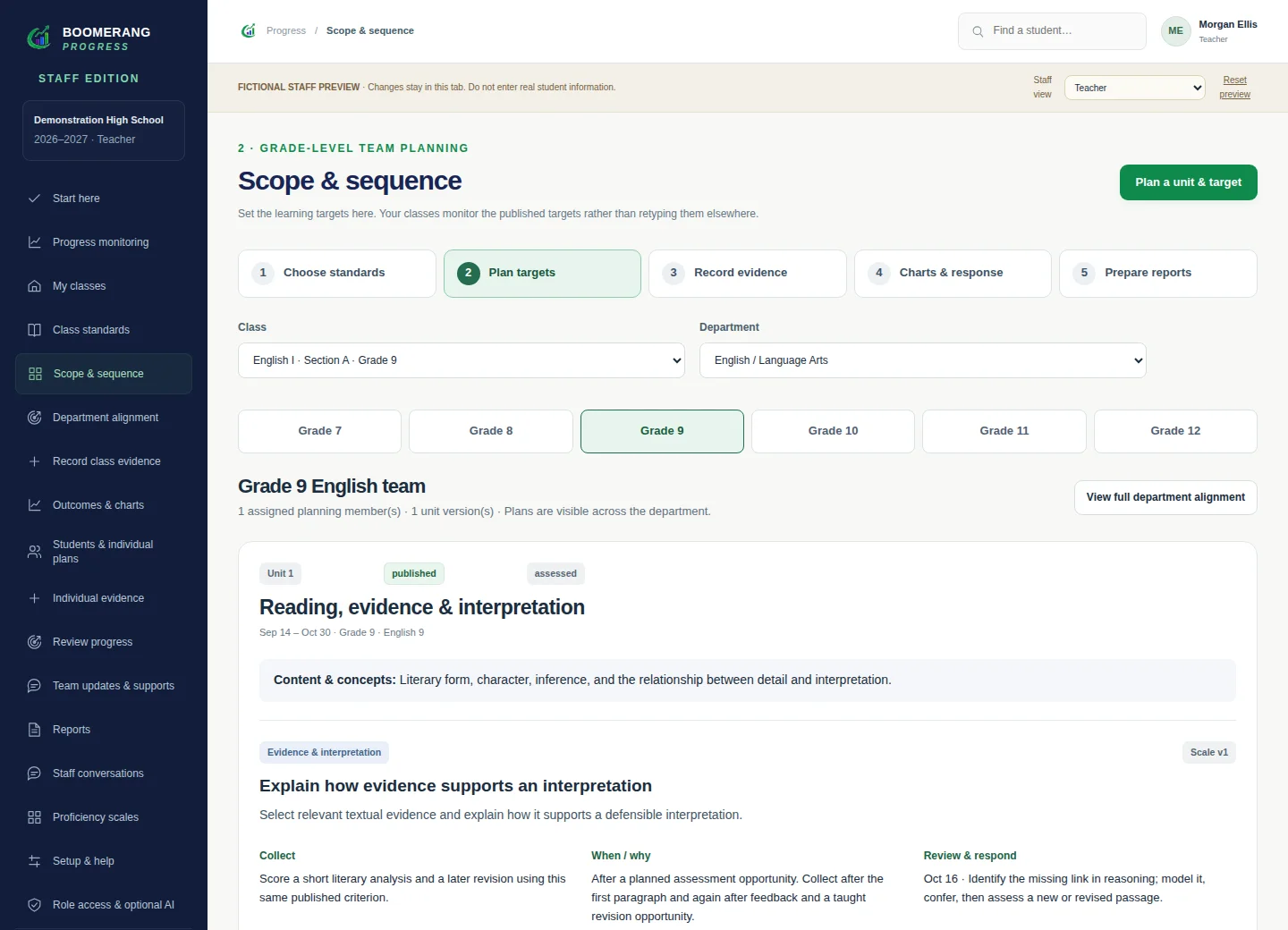
Plan units and learning targets across grades 7–12. Publish the target, success criteria, proficiency scale, evidence, and review schedule before monitoring begins.
Explore this screen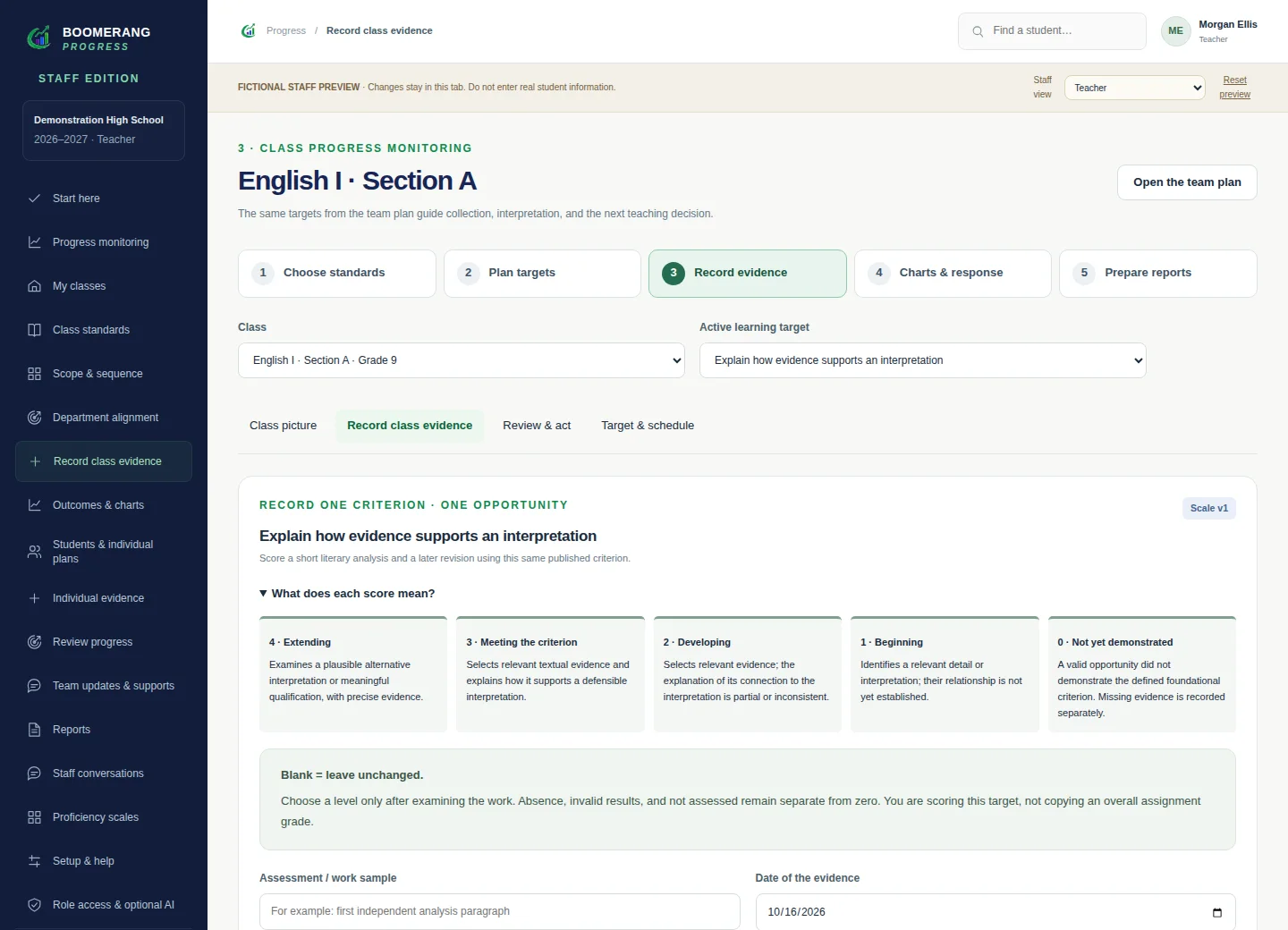
See the criterion descriptors before entering results. Assess one target at a time; keep absence and missing evidence separate from an observed zero.
Explore this screen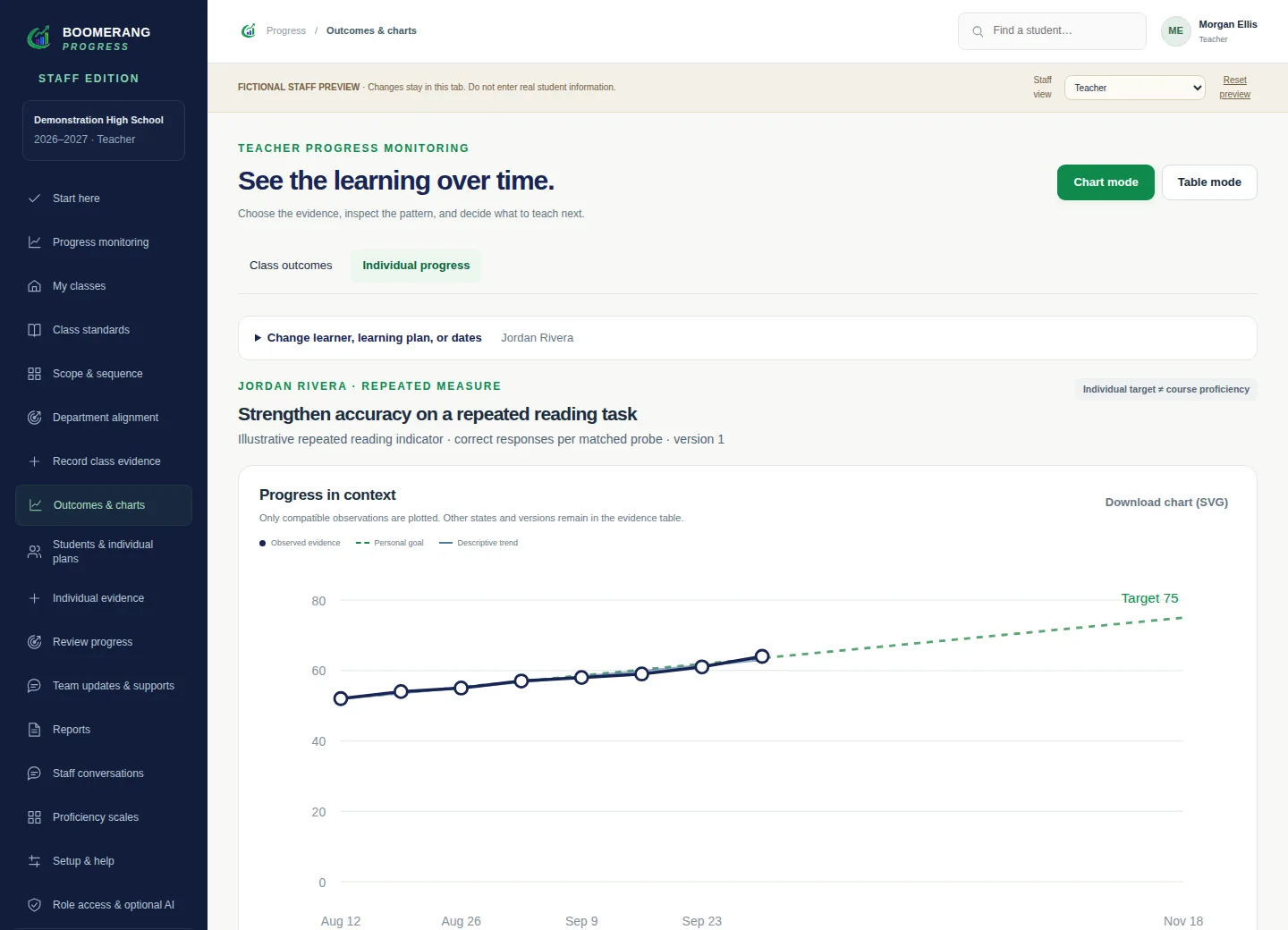
See comparable observations against the personal goal. Preserve measure versions, collection context, and interpretation limits.
Explore this screen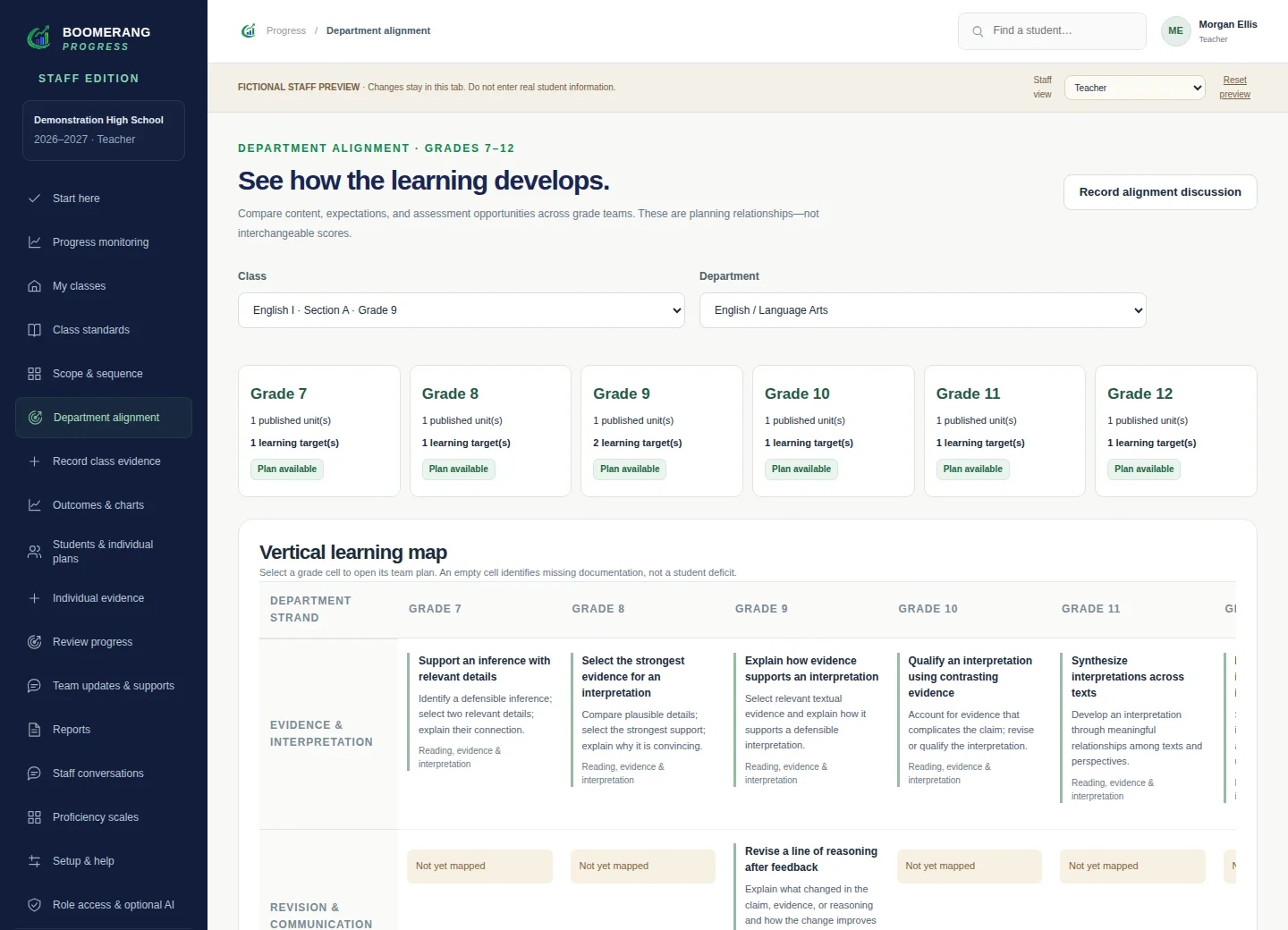
Inspect relationships among grade-team targets while preserving each subject’s content, criteria, and expectations. Keep unlike scores separate.
Explore this screen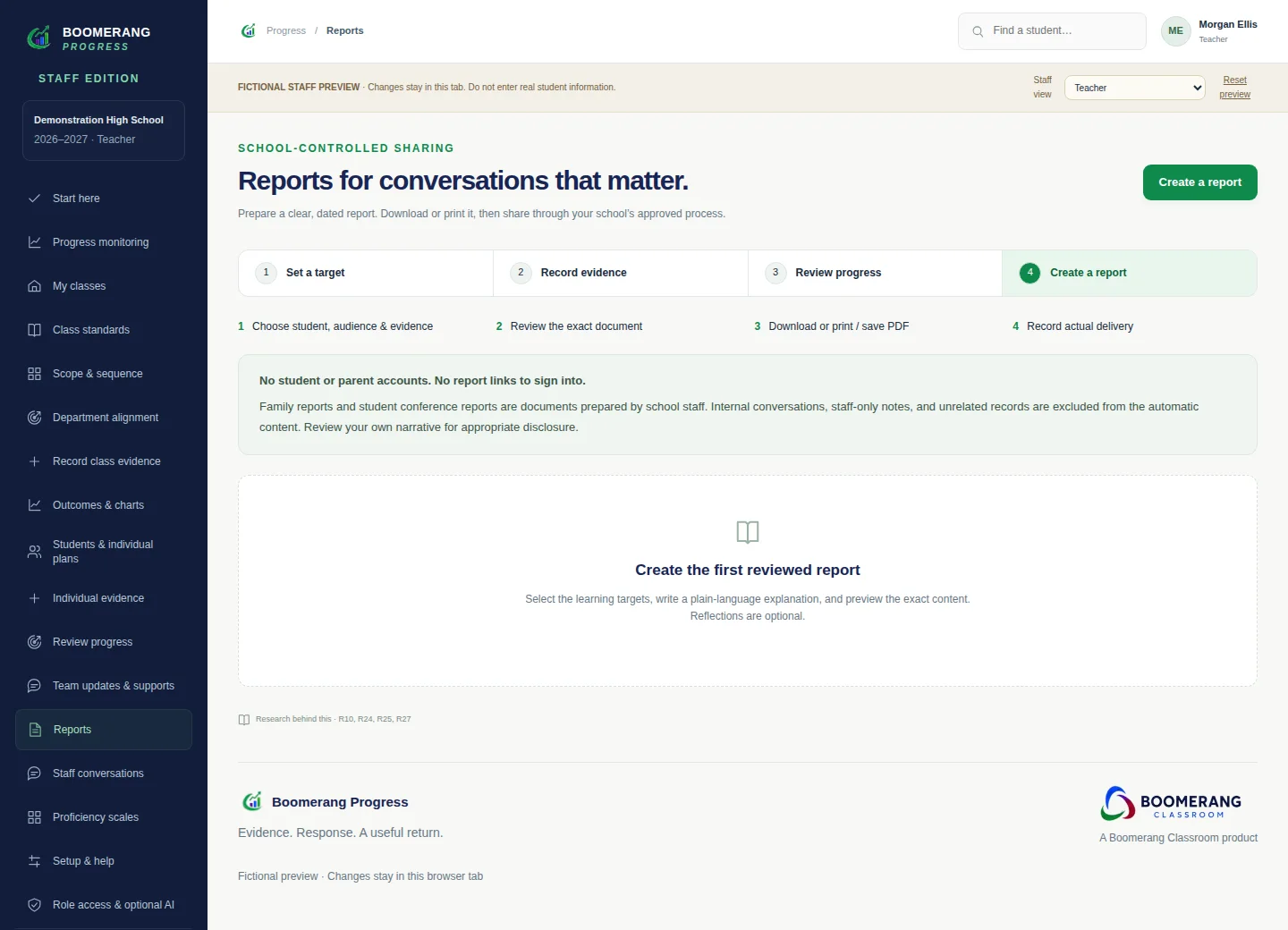
Select the evidence, review the narrative and charts, then download or print a document for an approved school sharing process. No external portal or account.
Explore this screen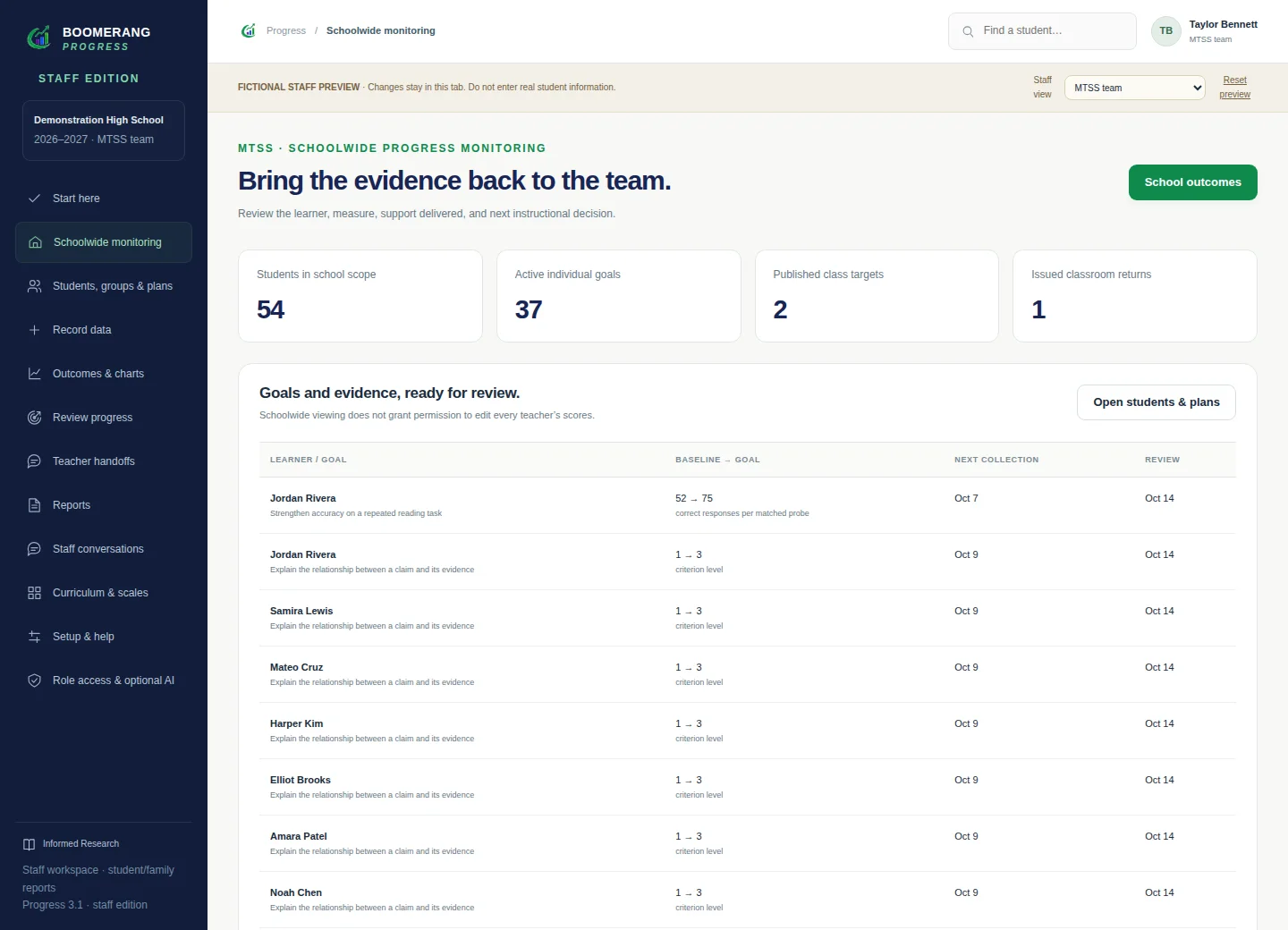
Follow the school pattern into an authorized student goal, review the original evidence, and prepare a useful classroom return.
Explore this screen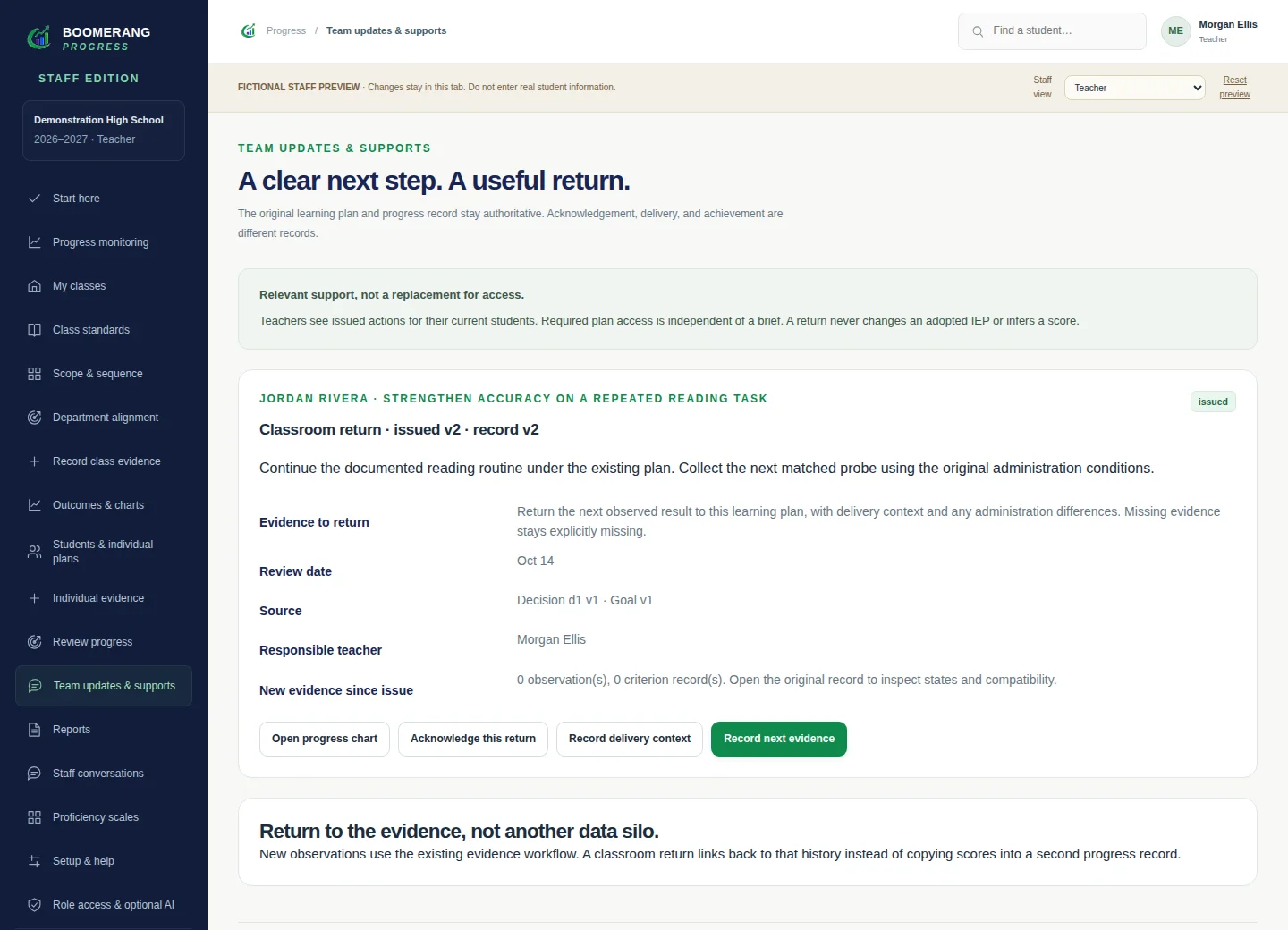
A reviewed action comes back to the teacher. Acknowledgement, delivery context, and the next evidence remain separate and connected.
Explore this screenCaptured from this working build; fictional school and learner information. Designs may evolve before Spring 2027. Screens do not establish product effectiveness or district approval.
Record a paper reflection, an exit ticket, or a student conference. Identify exact words versus a staff summary, preserve the staff author, and document the response.
Select a reflection for a reviewed report when appropriate. Self-assessment remains separate from the teacher’s judgment.
“I found a stronger quotation, but I still need to explain why it supports my interpretation.”
Explain the reasoning aloud, then revise the sentence connecting evidence to the claim.
Four staff views, one connected learning record. Teachers keep their full monitoring toolkit; support teams bring a reviewed next step back to class. No student or parent portal.
Class and individual progress charts, comparable evidence, goals, instructional responses, team updates, and reviewed reports.
Explore this staff viewIndividual goals, classroom context, reflection records, and reviewed teacher handoffs linked to the original evidence.
Explore this staff viewVerified schoolwide visibility, class and individual progress, teacher handoffs, delivery context, and scheduled review.
Explore this staff viewProtected school summaries, authorized class and student drilldown, curriculum coherence, and the classroom return.
Explore this staff viewMake content, skills, timing, and assessment opportunities visible across departments. Build and review clear proficiency descriptors. Keep a personal goal distinct from a course expectation.
Shared reasoning. Different subject evidence. No cross-subject average.
For a comparable numeric measure, view observed scores, the goal line, and an eligible trend together. Keep the baseline, current result, goal, and units in context.
Four eligible observations below the goal line can prompt an early review once the measure’s approved prerequisites are met.
Individual progressRead current criterion distributions, compare the same learners across evidence occasions, and open the evidence trail for the student who needs a closer look.
Missing work and absence stay distinct from an observed zero.
Classroom evidenceAgree on the target. Identify who needs support. Choose a response. Consider who is ready for more. Set the next review date.
Keep the decision, support delivered, and reassessment together for the next meeting.
Support-team follow-throughAssigned staff see authorized records. Special education follows verified caseloads. Designated MTSS and leadership staff receive explicitly scoped schoolwide views; families receive staff-reviewed reports.
No third-party analytics, advertising trackers, or behavioral profiling are included.
Privacy & dataNational measurement guidance and research on assessment, feedback, and instructional adjustment guide the work. Student self-assessment, subject-specific literacy, and data-use research inform the design.
A 2025 meta-analysis of 25 studies involving 7,379 students found a small positive average effect for learning progress monitoring. Its findings suggest at least weekly checks, with stronger effects when teachers received consultation and support for adapting instruction. Read the peer-reviewed synthesis. These findings inform the design; Boomerang Progress has not been evaluated in an effectiveness study.
In development · Scheduled release: Spring 2027 · Fictional preview